
Breath Easy: When and Why to Decant or Aerate a Bottle
2/19/20262 min read
More Than a Fancy Vase
To the casual observer, pouring wine into a glass carafe might look like pure theater—a sophisticated ritual designed to impress guests. However, decanting is a dual-purpose technical process rooted in physics and chemistry.
Whether you are dealing with a 20-year-old vintage or a powerful young "Cult Cabernet," moving the wine from the bottle to a decanter serves two distinct functions: clarification and aeration. Understanding which one your wine needs is the key to unlocking its full potential.
Aeration: "Opening Up" Young Wines
When a wine is bottled, it is often in a "closed" state. For young, bold red wines with high tannin structures, the sudden introduction of oxygen (O2) acts as a catalyst.
Softening Tannins: Oxygen promotes the polymerization of tannins, making them feel less aggressive and "sandpaper-like" on the tongue.
Dissipating Volatiles: Some wines develop "reduction" in the bottle, which can smell like struck matches or sulfur. A vigorous splash-decant helps these volatile compounds evaporate, allowing the primary fruit aromas to shine.
Expanding the Bouquet: Aeration increases the vapor pressure of the wine's aromatic compounds, effectively "turning up the volume" on the scents of berries, spices, and oak.
Decanting: Clarification for Aged Vintages
For older wines, the goal is completely different. Over time, tannins and color compounds bond together and fall out of the liquid, creating a gritty sediment at the bottom of the bottle. While harmless, this sediment is bitter and ruins the texture of the wine.
The Gentle Pour: Unlike the "splash" used for young wines, decanting an old vintage requires a steady hand and a light source (traditionally a candle, but a flashlight works perfectly). You pour slowly until you see the sediment reach the neck of the bottle, then stop.
The Oxygen Risk: Be careful—old wines are fragile. Too much oxygen can cause their delicate aromas to fade in minutes. For a wine from the 90s or earlier, decant it just before serving to remove the sediment, but don't let it "breathe" for hours.
Timing the Air: A Practical Guide
Since we aren't using tables, here is a quick technical reference for how long to let different styles breathe:
Full-Bodied Red Wines (Cabernet Sauvignon, Syrah, Nebbiolo): These are the primary candidates for aeration. They typically need 30 to 60 minutes in a wide-base decanter to reach their peak.
Medium-Bodied Reds (Sangiovese, Merlot, Malbec): These benefit from a shorter window of 15 to 30 minutes.
Light Reds (Pinot Noir, Gamay): Use caution. These wines are prized for their delicate floral notes, which can be lost with too much air. 10 to 15 minutes is usually plenty, or simply let them open up in a large Burgundy glass.
Complex White Wines: Surprisingly, high-end oaked Chardonnays or aged Rieslings can benefit from 10 minutes of air to shake off their "reductive" notes and show their creamy complexity.
The Tool for the Job: Decanter Shapes
The shape of your decanter should match your objective:
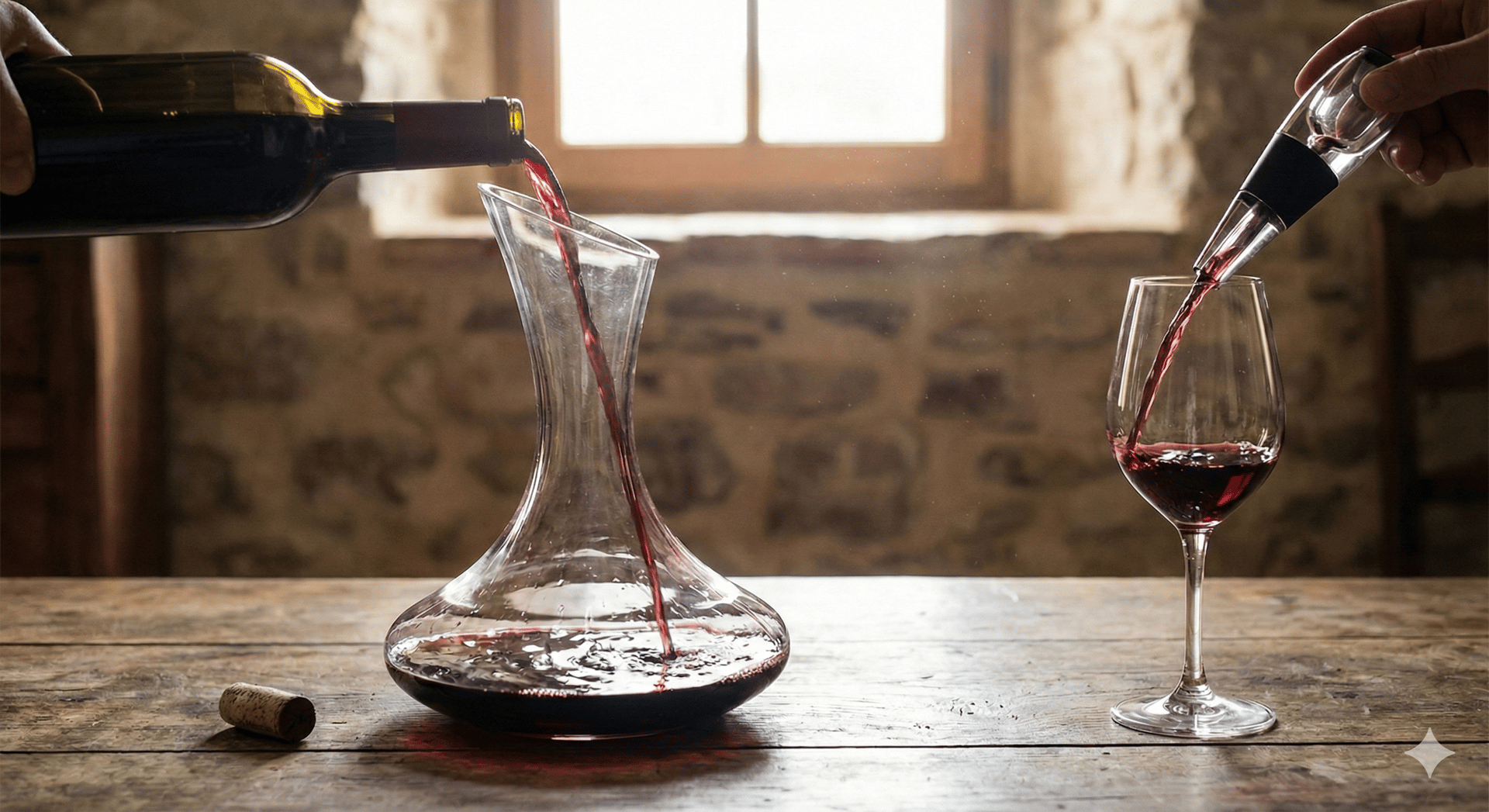
The Wide-Base Decanter: Designed for maximum surface area. This is the "aerator," intended to get as much oxygen into a young, tight wine as possible.
The Narrow "Duck" Decanter: Designed to minimize air contact while allowing you to pour off the sediment. This is the choice for fragile, older vintages.
In-Bottle Aerators: These gadgets provide instant aeration as you pour. They are excellent for a casual Tuesday night glass, but they don't replace the gentle clarification that a traditional decanter provides for a full bottle.
Trust the Process
Decanting is the final step in the winemaking journey—a moment where you take control of the wine’s evolution. By understanding whether your bottle needs a "breath of fresh air" or a "gentle separation," you ensure that the wine you serve is exactly as the winemaker intended: balanced, aromatic, and crystal clear.