
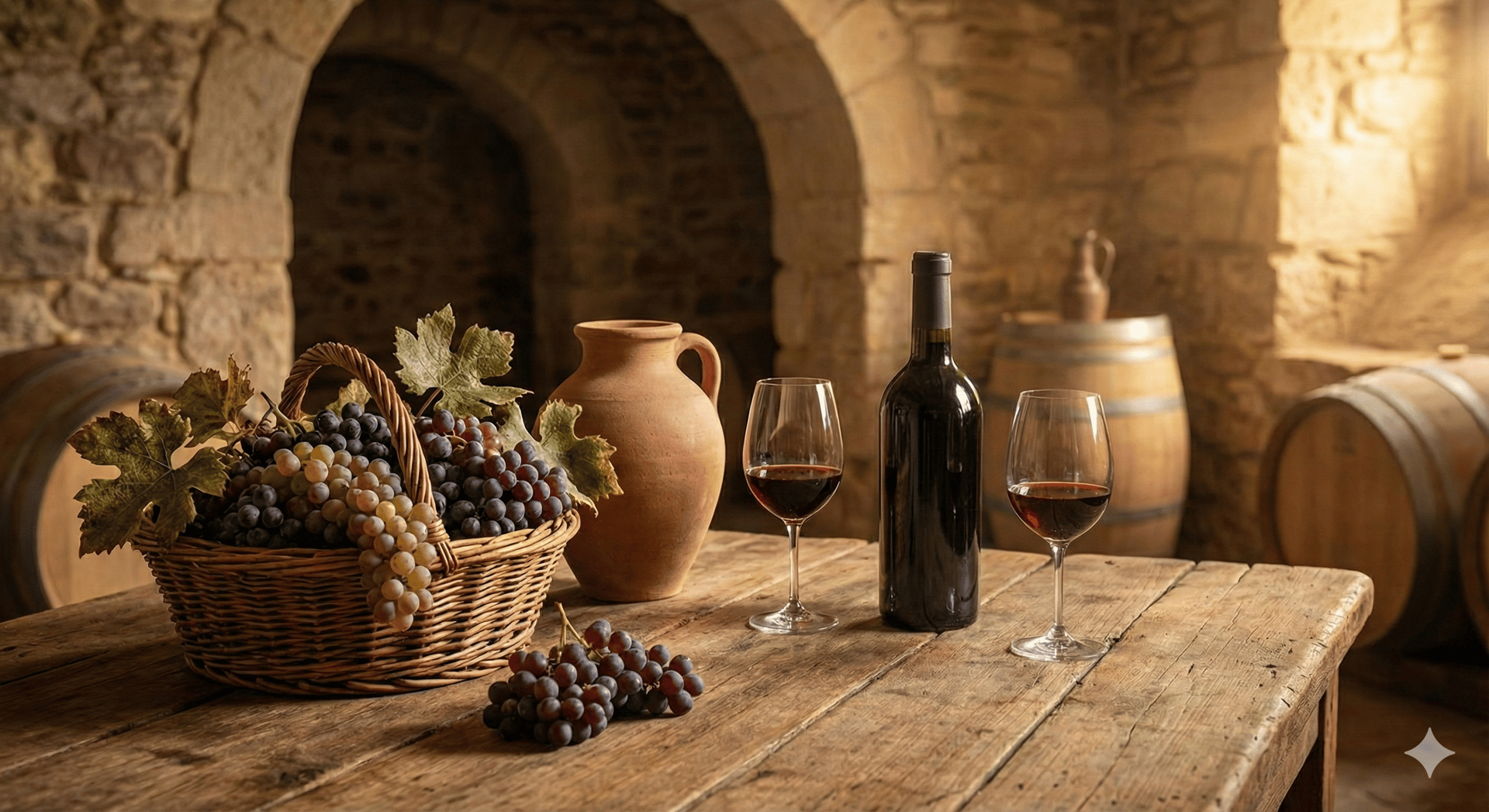
Heritage Grapes
The Revival of Ancient Flavors
2/14/20262 min read
Beyond the Famous Names
For decades, the wine world has been dominated by a few "celebrity" grapes: Cabernet Sauvignon, Merlot, and Chardonnay. While these varieties produce incredible wines, they are only a tiny fraction of the thousands of grape types that exist. Today, a fascinating movement is taking place: winemakers and researchers are acting like "wine archaeologists," rescuing ancient and nearly extinct grape varieties from oblivion.
These heritage grapes are more than just a novelty. They offer a window into the history of their regions and, more importantly, they provide a solution for the future. Many of these ancient vines have survived for centuries in harsh conditions, making them naturally resilient to the heat and unpredictable weather patterns we face in 2026.
The Survivors: Grapes Making a Comeback
A few names that were almost forgotten are now becoming the "stars" of the most innovative wine lists in the world.
Saperavi (Georgia)
One of the oldest grapes in existence, hailing from the birthplace of wine. Saperavi is a rare "teinturier" grape, meaning it has both red skin and red flesh, resulting in wines of deep, ink-like color. It is celebrated for its ability to produce powerful, age-worthy wines with notes of dark berries, tobacco, and a unique earthy soul that feels connected to the ancient world.
Assyrtiko (Greece)
Originally from the volcanic island of Santorini, this ancient white grape is a miracle of nature. It can grow in bone-dry, wind-swept soils and still produce a wine with electric acidity and intense minerality. As wine regions become warmer, Assyrtiko is being planted globally because it maintains its freshness even in extreme heat.
País (Chile)
Brought to the Americas by Spanish missionaries in the 16th century, the País grape was ignored for centuries in favor of French varieties. Now, it is the face of the "New Chile." Produced from 100-year-old vines, it creates light, rustic, and vibrant red wines that are perfect for the "Chilled Red" trend.
Mencía (Spain)
Once considered a grape for simple, bulk wine in Northwestern Spain, Mencía has been rediscovered. In regions like Bierzo, it produces elegant, floral reds that critics often compare to high-end Pinot Noir or Cabernet Franc. It is a grape that perfectly expresses the stony, mountainous terrain where it grows.
The "Genetic Treasure" Project
In regions like Catalonia and Bordeaux, major estates (such as the Familia Torres) have launched massive projects to identify "unknown" vines growing in the wild or in old family gardens. Using DNA testing, they have found varieties that haven't been commercially used since before the phylloxera plague of the 1800s.
These "Ancestral Varieties" are being replanted not just for their unique flavors—which often include exotic spices and flowers—but because they ripen later in the season. This late ripening is a huge advantage in 2026, as it allows the grapes to develop complexity without losing their balance in the summer heat.
Why You Should Try Them
Exploring heritage grapes is like traveling back in time through your glass. When you choose a Saperavi or a Mencía, you are supporting biodiversity and helping to preserve a cultural heritage that was nearly lost. These wines offer textures and aromas that you simply won't find in a standard Cabernet. They are wines of character, stories, and resilience.
The Future is in the Past
The revival of ancient grapes proves that in the world of wine, the newest trend is often thousands of years old. By looking back to our ancestors' vines, we are finding the tools to create a diverse and sustainable future for viticulture. The next time you see a name you don't recognize on a wine label, don't be afraid—embrace the opportunity to taste a piece of living history.