
The Architecture of the Palate
Understanding Structure and Balance
2/27/20262 min read
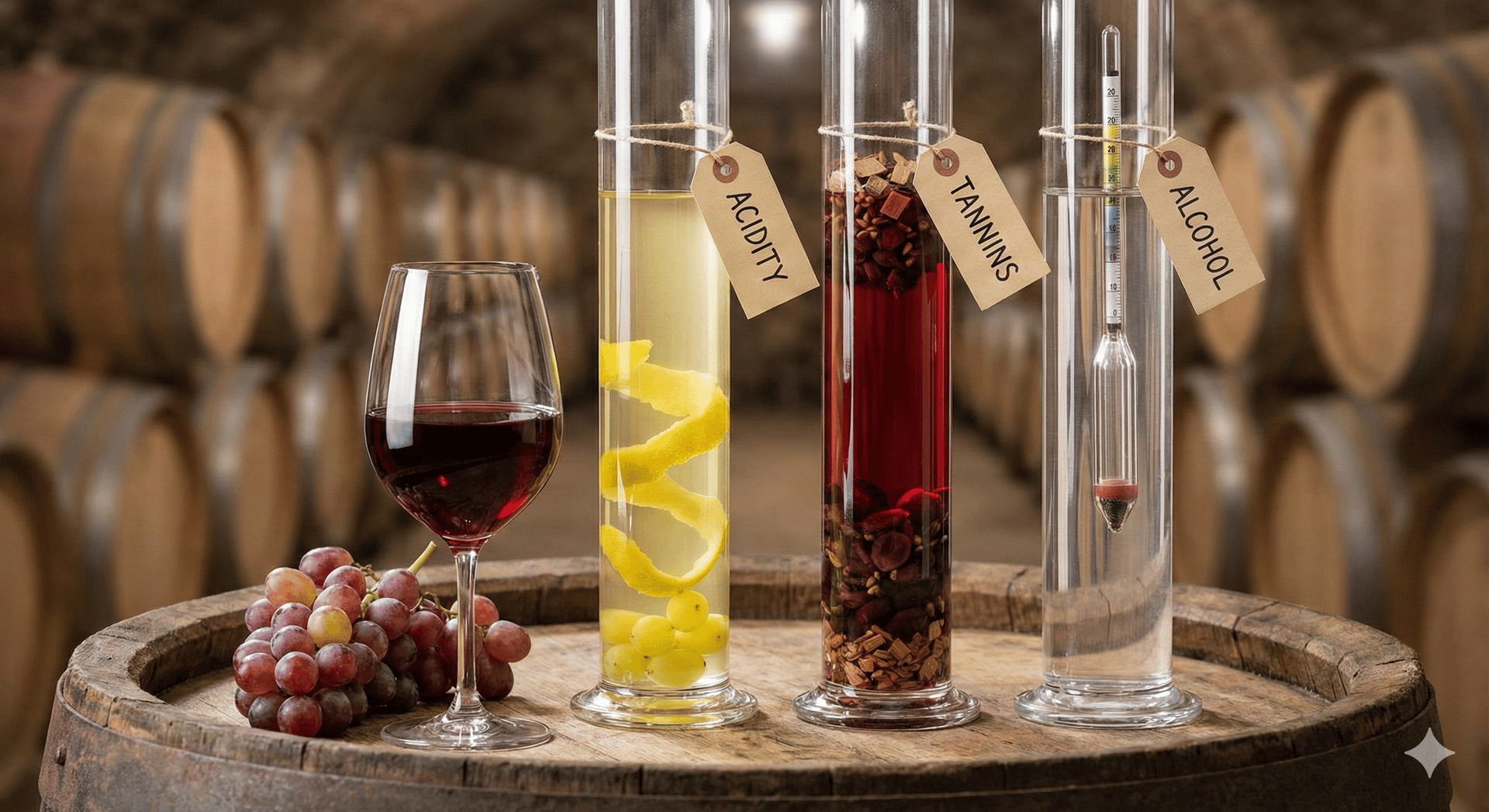
When we talk about the "palate," we are moving beyond what the wine tastes like and focusing on how it feels. In professional tasting, we analyze the wine’s architecture. A wine's structure is built on four main pillars: Acidity, Tannins, Alcohol, and Sugar.
Just as an engineer looks for balance in a physical structure to ensure stability, a taster looks for a "balanced" wine. If one pillar is too weak or too strong, the entire experience can feel unstable—either too "sharp," too "heavy," or too "hot."
The Four Pillars of Structure
To analyze the palate, you must learn to isolate the physical sensations triggered by the liquid:
Acidity (The Nervous System): This is the sensation of freshness. It triggers salivation on the sides of your tongue. High acidity makes a wine feel "electric" and vibrant. Without enough acidity, a wine tastes "flabby" and heavy.
Tannins (The Framework): Found primarily in red wines, tannins are polyphenols that create a drying, astringent sensation on your gums and tongue. They provide the "grip" and the skeleton of the wine. We describe them by their texture: are they "green" and aggressive, or "velvety" and well-integrated?
Alcohol (The Warmth and Weight): Alcohol provides the body and the "viscosity" of the wine. You perceive it as a sensation of heat in the back of your throat. A "full-bodied" wine usually has higher alcohol, giving it a richer, weightier feel in the mouth.
Sugar and Body (The Volume): Even in dry wines, there is a sense of "weight" on the tongue. This is the "mouthfeel." It ranges from light (like water) to medium (like whole milk) to full (like heavy cream).
The Concept of Balance
The hallmark of a great wine is balance. This occurs when all the structural elements are in harmony:
In White Wines: The primary tension is between Acidity and Fruit/Alcohol. If the acidity is too high, the wine is tart; if the alcohol is too high without acidity, it feels flat.
In Red Wines: The balance is a "triangle" between Acidity, Tannins, and Alcohol. A high-tannin wine needs enough fruit concentration and alcohol to "carry" that dry structure, or it will feel like drinking liquid wood.
Texture and Mouthfeel: The "Tactile" Experience
The mouth also perceives the texture of the wine, which is influenced by winemaking choices:
Creaminess: Often a result of "Malolactic Fermentation" or aging on the lees (yeast).
Silkiness: Common in aged wines where tannins have polymerized and become smoother.
Effervescence: In sparkling wines, the size and persistence of the bubbles (the "mousse") significantly affect the palate’s perception of quality.
The Final Metric: The Finish (Length)
Once you swallow (or spit) the wine, the analysis isn't over. You must measure the Finish.
Short Finish: The flavors disappear in less than 5 seconds. Usually indicates a simple, everyday wine.
Medium Finish: Flavors linger for 5 to 15 seconds.
Long Finish: The pleasant sensations and flavors persist for 20, 30, or even 60 seconds. This is the ultimate sign of a high-quality, well-engineered wine.
The Balanced Blueprint
Mastering the palate means learning to "listen" to the physical reactions in your mouth. When you can identify that a wine has "high acidity, medium-plus tannins, and a long finish," you are no longer just an amateur—you are an analyst. You are seeing the blueprint behind the bottle, understanding why that specific wine stands tall or why it fails to impress.