The Systematic Approach: A Protocol for Tasting
2/22/20262 min read
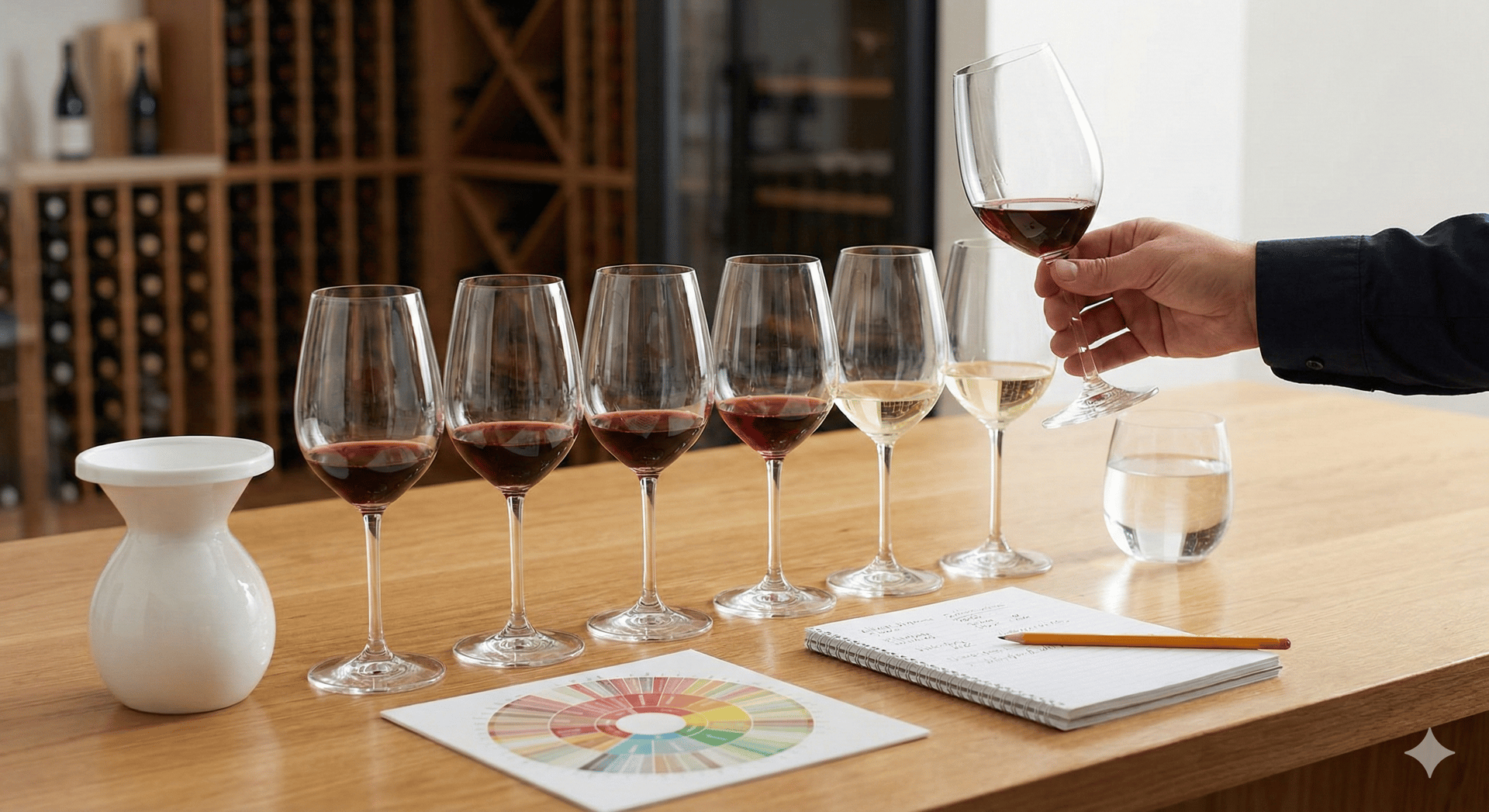
To the untrained observer, wine tasting looks like a series of random swirls and sniffs. However, for the serious enthusiast, it is a systematic inspection. Just as an engineer inspects a structure by following a specific checklist, a taster analyzes a wine by moving through four distinct phases: Visual, Olfactory, Palate, and Conclusion.
By slowing down and isolating each sense, you can deconstruct the wine into its base components. This process allows you to understand the grape, the region, and the winemaking techniques used, regardless of the label.
Phase 1: Visual Analysis (The Sight)
Before you even smell the wine, it has a story to tell. Tilt your glass at a 45-degree angle against a white background (like a napkin or a piece of paper) and look for the following:
Clarity: Is the wine crystal clear or hazy? Haziness can indicate a "natural" wine that hasn't been filtered, or it could be a sign of a fault.
Color Intensity: Look at the center of the wine (the "core"). Is it pale, medium, or deep? In reds, a deep color often suggests a thicker-skinned grape like Malbec or Cabernet Sauvignon.
The Hue: Look at the edges of the wine (the "rim"). For whites, does it look green (young), lemon, or gold (aged/oaked)? For reds, is it purple (young), ruby, or tawny/brown (aged)?
Viscosity (Legs): When you swirl the wine, look at the droplets that crawl down the glass. "Thick legs" often indicate higher alcohol or higher sugar content.
Phase 2: Olfactory Analysis (The Nose)
Your nose is your most powerful tool. It is capable of detecting thousands of different chemical compounds.
The First Sniff: Take a quick sniff without swirling the glass. This tells you if the wine is "clean" (free of faults like cork taint).
The Swirl: Now, swirl the glass gently to introduce oxygen (O2). This increases the vapor pressure of the aromatic compounds, releasing the wine's bouquet.
Identifying Aromas: Don't try to find every scent at once. Start with broad categories: Is it fruity? Floral? Herbal? Spicy? Once you have the category, get specific: Is it a red cherry or a black cherry? Is it fresh basil or dried oregano?
Phase 3: Palate Analysis (The Taste)
This is where you confirm what your eyes and nose have predicted. Take a medium sip and "chew" the wine, letting it coat your entire tongue.
Structural Components: Focus on the sensations rather than just the flavors. How much is your mouth watering? (Acidity). Do you feel a drying, sandpaper-like sensation on your gums? (Tannins). Do you feel a warming sensation in the back of your throat? (Alcohol).
Flavor Profile: Do the flavors match the aromas you found earlier? Sometimes a wine smells like sweet fruit but tastes completely dry.
The Finish: This is the "length" of the wine. After you swallow (or spit), how many seconds do the pleasant flavors remain on your tongue? A long finish is a primary indicator of a high-quality wine.
Phase 4: The Conclusion (The BLIC Test)
Professional tasters use the BLIC acronym to provide a final, objective score for the wine:
B - Balance: Are the acidity, tannin, and alcohol working together, or is one element sticking out unpleasantly?
L - Length: Does the flavor linger for a long time, or does it disappear instantly?
I - Intensity: Are the flavors bold and clearly defined, or are they weak and watery?
C - Complexity: Does the wine tell a story with many different layers of flavor, or is it a "one-note" experience?
Practice Makes Permanent
The Systematic Approach is a skill that improves with every bottle. You don't need to be an expert to start; you just need to be observant. By using this protocol, you transform the act of drinking into an act of learning. Over time, you will find that your palate becomes sharper, your vocabulary richer, and your appreciation for the "engineering" behind every bottle deeper.